What Is The Empathy Set?

What Is The Empathy Set?
The Empathy Set is a practical tool for emotional literacy, empathy, and conscious communication.
It comprises two sets of cards, 56 feelings and 56 needs, that help people identify and articulate what is happening inside them during moments of tension, conflict, disconnection, or uncertainty.
The cards are available in two editions.
The Original Edition presents only the feelings and needs words themselves, inviting a more intuitive and personally resonant exploration.
The Definitions Edition includes short definitions for each card, offering additional guidance and support for those developing emotional vocabulary or wanting more structure.
Neither edition is better. They simply support different styles of engagement. Some people are drawn toward intuitive resonance. Others appreciate additional conceptual guidance. Many find value in both.
Both editions support the same core intention: helping people move from reaction and judgment toward greater clarity, self-awareness, empathy, and connection.
As Marshall Rosenberg, founder of Nonviolent Communication, often taught, empathy begins with understanding another person's feelings and needs. The Empathy Set was created to support that process in practical everyday life.
Why People Use The Empathy Set
Many difficult conversations go poorly not because people do not care, but because they struggle to express clearly what is happening inside them.
We may know we are upset, frustrated, anxious, hurt, overwhelmed, or disconnected, yet still lack the language to communicate our experience in a way another person can truly hear.
Instead, conversations often drift toward:
blame
criticism
defensiveness
withdrawal
silence
or escalation
The Empathy Set helps slow the process down. By identifying feelings and needs more clearly, people are often able to communicate with greater honesty, responsibility, and empathy.
The cards are used by:
individuals and couples families
therapists and coaches
mediators and facilitators
teachers and students
workplace teams
and leaders

Using The Empathy Set in mediation
A Simple Example
Instead of saying:
"You never listen to me."
A person might discover something more honest and constructive:
"When I'm interrupted, I notice frustration because I really want to feel heard and understood. Would you be willing to let me finish before responding?"
The shift is subtle, but important. Rather than escalating conflict through accusation, the conversation begins with self-awareness and opens space for dialogue.
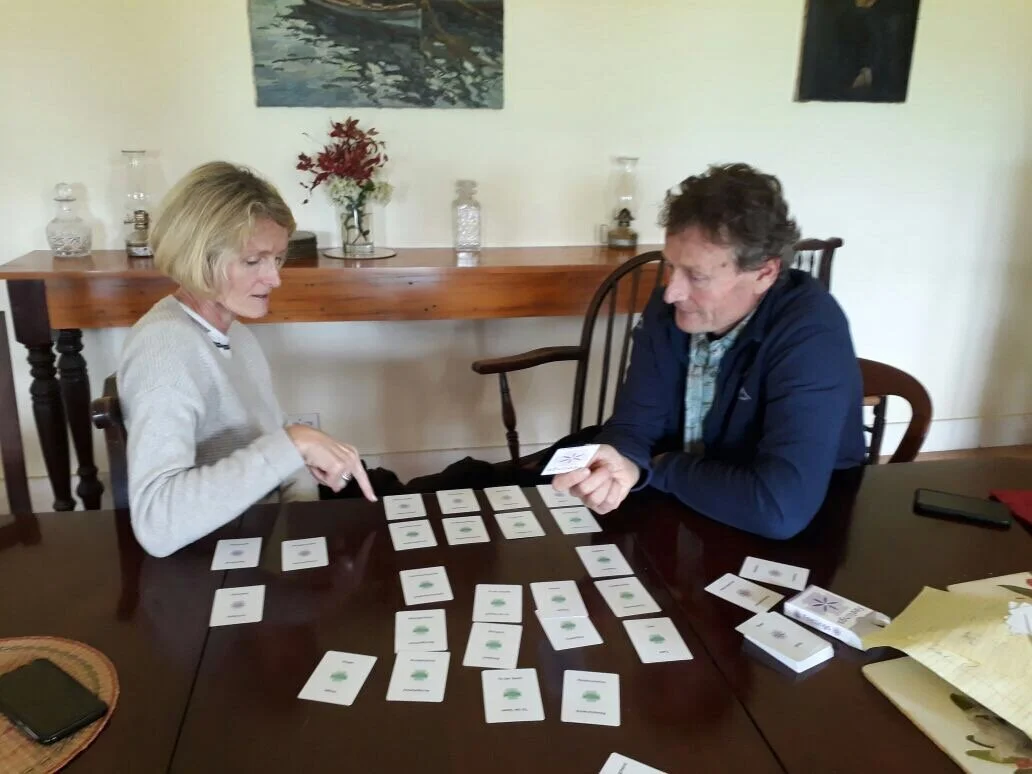
Exploring feelings and needs during a difficult conversation
How The Cards Help
The cards support people in:
identifying feelings more accurately
recognizing unmet needs
preparing for difficult conversations
listening more empathically
finding common ground during conflict
moving from blame toward understanding
Many users are surprised by how much clarity emerges once they begin sorting through the cards. Feelings that initially seemed tangled or overwhelming often become easier to understand. Needs that were hidden beneath frustration or defensiveness become more visible. That clarity often changes the conversation itself.

Exploring feelings and needs
Learn More
You can explore instructions for using the cards, demonstration videos, the Empathy Guide, and writings on empathy, emotional literacy, and communication throughout this site.
The Original and Definitions Editions, along with related tools including the talking sticks and dictionary, are available in the store.