
The Empathy Guide

Some of the wisest voices on empathy, gathered in one place.
Yours free.
Empathy is what changes hard conversations. It is what softens the person across from you, what lets you be heard when you speak, what turns disagreement into something workable. It is also easy to lose in the moments it matters most.
This guide brings together the teachers who have said the truest things about empathy across the last century. Marshall Rosenberg, Carl Rogers, Daniel Pink, Roman Krznaric, and others, gathered by theme so you can find the voice you need when you need it. Warm, image-rich, and short enough to read in one sitting. You will return to it.
Inside, you will find:
Plus a bonus: A Practical Path to Presence, Understanding, and Connection
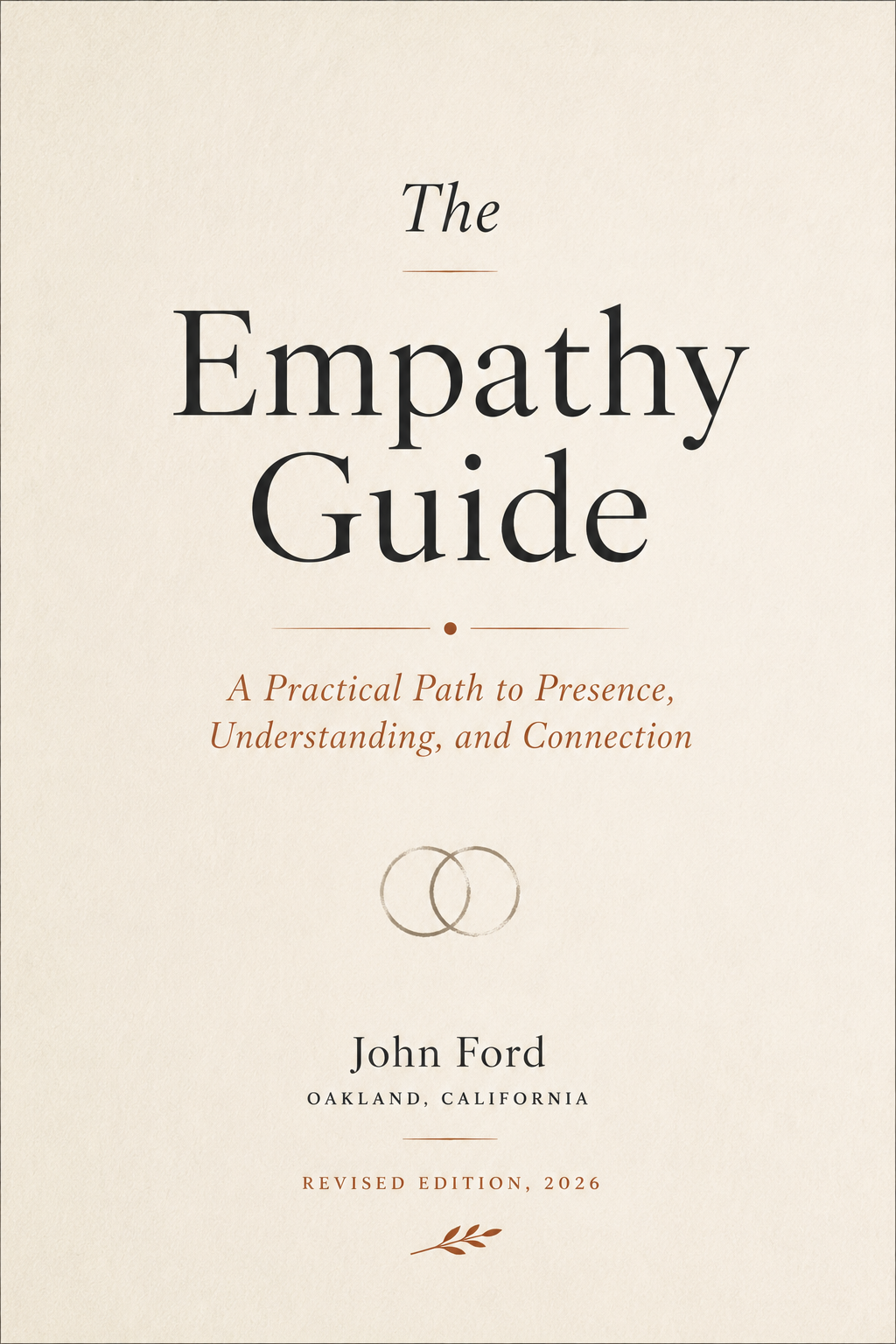
The Empathy Guide, V2, 2026.
When you sign up, you will also receive a substantial 53-page companion guide that picks up where The Empathy Guide leaves off.
A Practical Path to Presence, Understanding, and Connection is written in my own voice, drawn from over thirty years of workplace mediation and training. It offers a working definition of empathy grounded in the language of feelings and needs, and it introduces the two capacities I have come to believe empathy actually rests on: genuine perception and deep imagination.
The guide goes further than most treatments of empathy dare. It looks at what empathy is not, distinguishing it carefully from sympathy, from fixing, from psychologizing, and from fawning, the disappearing act that so often gets mistaken for care. It examines why empathy is not a soft skill but a load-bearing one, drawing on research and on decades of mediation practice. And it turns inward, exploring self-empathy as the ground floor of everything else, because you cannot track another person's experience if you have abandoned your own.
The hardest chapters ask what happens to empathy when we are activated, when the person in front of us is activated, when the stakes are high and the nervous systems are loud. These are the moments empathy matters most, and they are the ones it most often fails us. The guide names what actually happens, and offers practices that make empathy durable enough to survive the pressure.
It closes with an honest reckoning of what empathy does not do. Empathy is not a substitute for boundaries. It is not the same as solving the problem. It does not require you to give up your own view. Naming these limits, rather than pretending empathy is everything, is what makes the practice sustainable.
Yours to open whenever you are ready. Both guides are yours in seconds, at no cost.