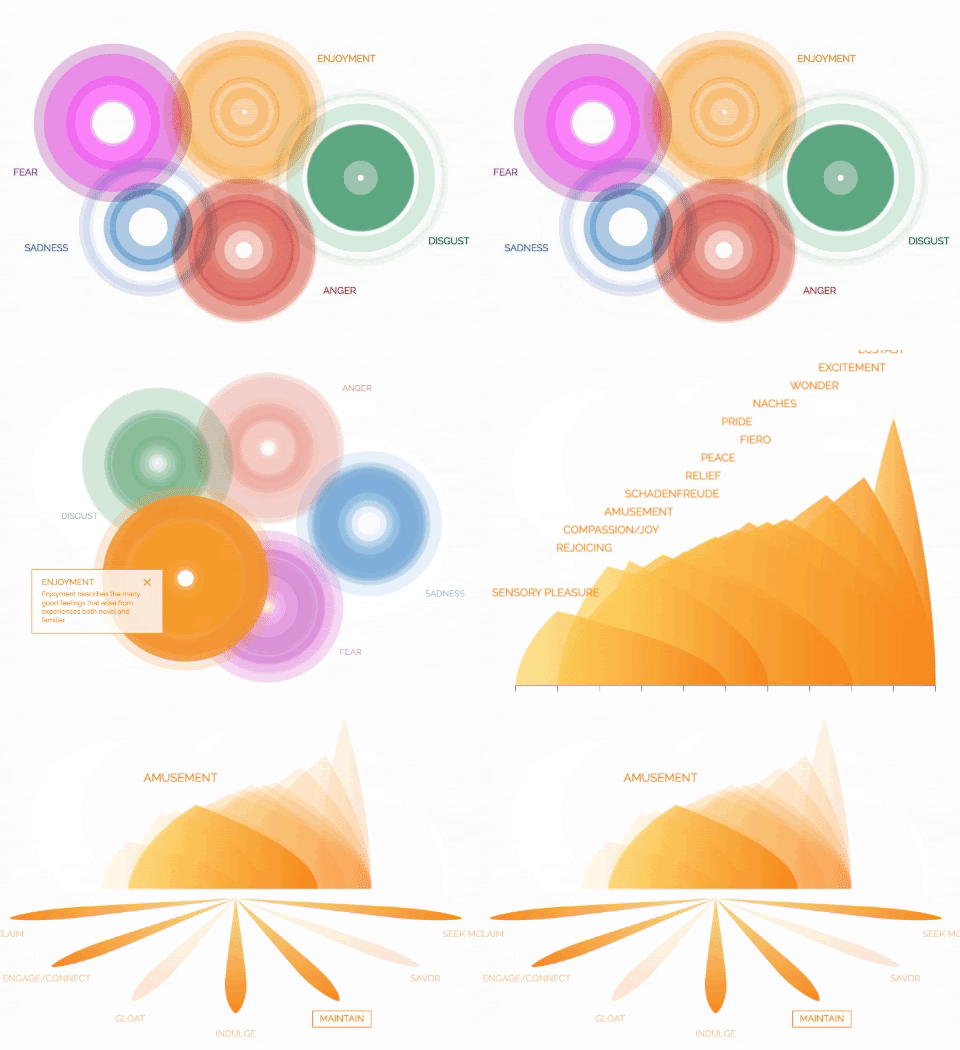
In collaboration with His Holiness the Dalai Lama, Drs. Paul Ekman and Eve Ekman developed the Atlas of Emotions, an interactive educational resource designed to help people better understand their emotional lives.
The project emerged from a simple but powerful observation: many of us react to emotions without fully recognizing what we are experiencing. We know we are upset, stressed, anxious, or overwhelmed, but we often lack the language and awareness needed to understand what is happening inside us.
The Atlas was created to address that gap.
Organized around five major emotion families — anger, fear, sadness, disgust, and enjoyment — the Atlas explores how emotions arise, how they vary in intensity, what triggers them, how they influence our behavior, and what we can do to respond more skillfully.
For me, one of the most valuable contributions of the Atlas is its support for emotional literacy. We cannot work skillfully with emotions that we cannot recognize or name. The more precisely we can identify what we are feeling, the more choice we have in how we respond.
This idea sits at the heart of both emotional intelligence and empathy. Emotional intelligence begins with awareness of our own emotional experience. Empathy requires us to recognize and understand the emotional experience of others. In both cases, emotional vocabulary matters.
The Atlas also highlights something central to my work on triggers: emotions are not the problem. They are information. When we become curious about our emotions rather than reactive to them, they can guide us toward greater understanding, wiser choices, and more compassionate relationships.
The Atlas of Emotions is available free to the public and remains one of the most accessible tools for exploring the rich landscape of human emotion.
The Atlas of Emotions is available for free to the public free as an online educational resource.
Dr. Paul Ekman (1934–2023) was a pioneering psychologist, researcher, and co-discoverer of micro-expressions. His groundbreaking work on emotion, facial expression, and emotional awareness transformed the fields of psychology, communication, conflict resolution, and emotional intelligence. In 2009, TIME magazine named him one of the 100 most influential people in the world. Together with his daughter, Dr. Eve Ekman, and in collaboration with the Dalai Lama, he helped create the Atlas of Emotions as a free educational resource to promote emotional awareness and compassion worldwide.