A note before you read (5/25/2026)
I'm leaving this post up because the story still matters and because I'd rather show my work than quietly revise it. But my language has changed in one important way, and I want to flag it before you read on.
When I wrote this, I used the term "faux feelings," the standard NVC label for words like "betrayed," "disrespected," or "ignored." I've since moved away from it. "Faux" means fake, and these feelings are not fake. When the manager in this story said "I felt betrayed," she was reporting something real. The experience behind the word was genuine.
What makes a word like "betrayed" distinct isn't that it's a fake feeling or a "non-feeling." It's that it carries a story about cause, an interpretation of what someone else did, often with judgment or blame attached. So I now call these storied feelings. The feeling is real. The word choice just shapes where your attention goes, in this case outward, toward what the other person did, rather than toward what you're feeling and needing.
I'd revise one other thing below. I describe the authentic feelings as the ones "not tainted by judgment," as though a storied feeling were a contaminated version of the real thing. I'd no longer put it that way. Storied feelings aren't tainted. They're tracks. They point somewhere worth following.
The insight at the heart of this post still holds. When someone says "I felt betrayed," that's an opening, not an error. You follow it toward the feelings and needs it carries. That's as true now as it was then. I've just found language that honors the person's experience more fully along the way.
If you want the fuller account of how I landed on storied feelings, click here.
Differentiating Between Feelings And Faux Feelings
By John Kinyon
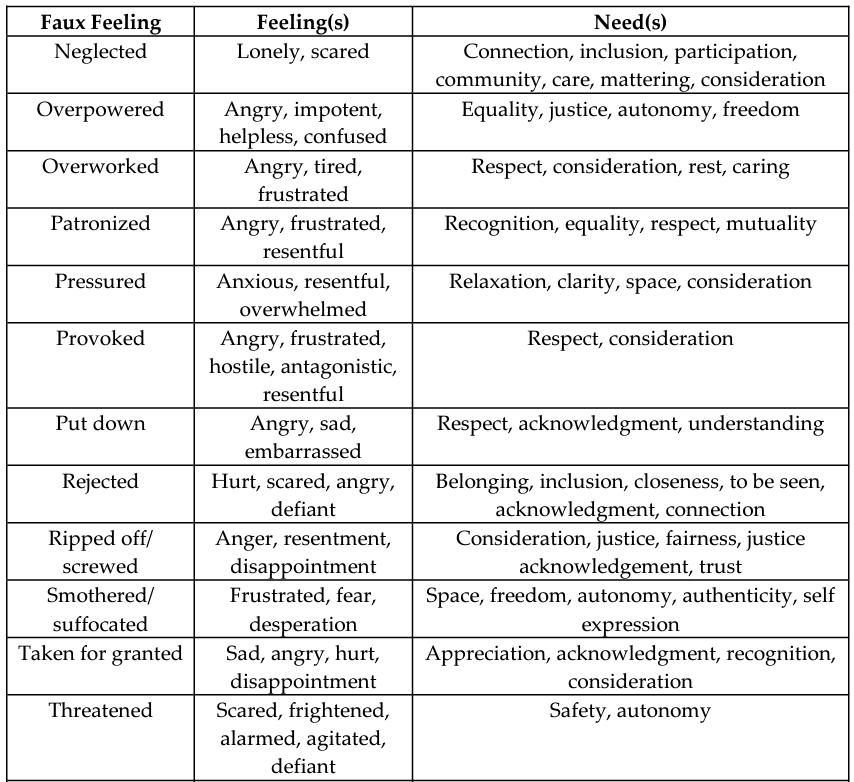
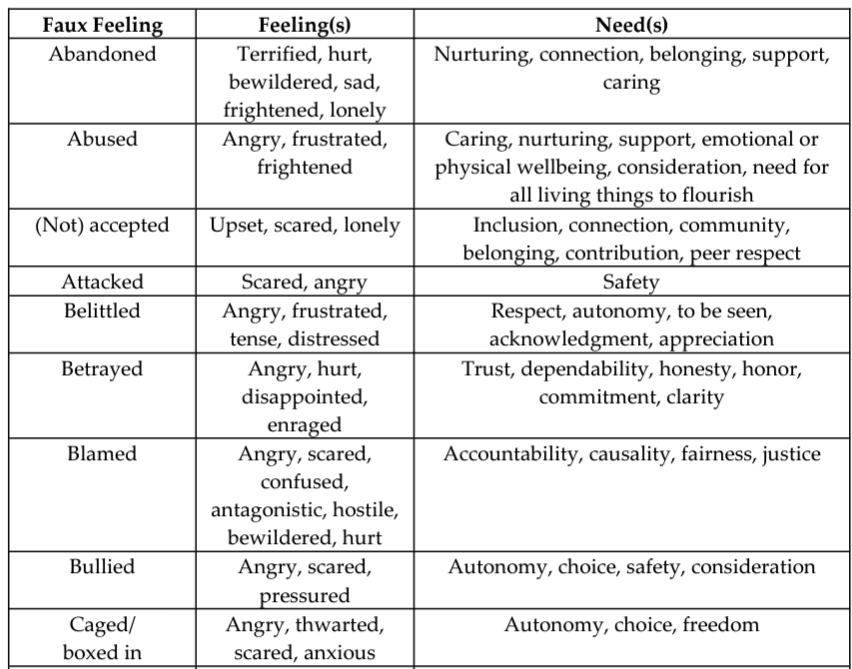
Feeling is awareness of inner bodily experience of sensations and emotions, versus thinking, such as “I feel like you don’t respect me,” or “I feel that you’re not listening.” Words commonly used for feelings often mix up thought and feeling (“faux feeling” language, e.g. “I feel judged, disrespected and unappreciated.”) Feelings relate to our perceptions of the world and the quality of our thinking. Feeling presence in our body and compassionately accepting our feelings creates inner connection and helps us process/integrate emotions.
The feelings and needs on this PDF Handout are suggestions only; this listing is neither complete nor definitive. It is intended as an aid to translating words that are often confused with feelings. These words imply that someone is doing something to you and generally connote wrongness or blame. To use this list, when somebody says “I’m feeling rejected,” you might translate this as: “Are you feeling scared because you have a need for inclusion?”
John Kinyon has devoted his life and career to furthering human connection and cooperation around the world through empathic communication. John is co-creator of the Mediate Your Life (MYL) training program and company, based in the work of Nonviolent Communication/NVC (cnvc.org).
More samples from the PDF file: